

It’s critical to choose the best CMS when creating a website for your company. Drupal and WordPress are two of the most well-liked alternatives available. Both CMS systems have their own distinct advantages and features, but knowing how they vary from one another will help you make a wise choice. To help you decide which one best meets your company’s goals, we’ll compare Drupal Vs WordPress in this blog, emphasizing both of their advantages and disadvantages.
Table of Contents
What is Drupal?
Open-source Drupal is a strong, flexible content management system. It is perfect for complicated websites and enterprise-level projects because to its extensive offering of sophisticated features and functions. Building expansive websites with complex content structures, such as eCommerce platforms, social networking sites, and community-driven portals, is made possible with the help of Drupal
WordPress: What is it?
The most extensively used CMS in the world, however, is WordPress, which is renowned for being straightforward and user-friendly.
- It began as a platform for blogging but has now developed into a flexible CMS that can be used for many other kinds of websites.
- Small to medium-sized enterprises and individuals searching for an easy-to-use and intuitive platform to build and maintain their online presence are particularly fond of WordPress.
Drupal Vs WordPress similarities
Commonalities between Drupal and WordPress include:
- Ease of Use
When it comes to usability, WordPress shines. Because of its simple interface, even non-technical people may easily develop and administer websites. Despite being more complicated, Drupal has significantly improved user experience over time, with a more user-friendly interface and streamlined content development process.
- Customizability
High levels of customization are available on both CMS systems. WordPress has a vast collection of themes and plugins that enable users to quickly change the look and functionality of their websites.
On the other hand, Drupal is a fantastic option for organizations with special needs since it offers a wider variety of modules and gives users more control over the site’s structure and data management.
- Scalability
Scalable options include Drupal and WordPress. From little personal blogs to huge business websites, they can manage all sizes of websites.
- For organizations with strict scalability requirements, Drupal is the recommended option.
- Drupal has its architecture, which is built to manage complex and high-traffic websites more effectively.
Security
Both CMS systems place a high priority on security, and both have vibrant communities that often issue security updates and fixes.
- WordPress is, however, a more desirable target for hackers owing to its popularity and large user base.
- For companies with sensitive data or greater security needs, Drupal’s extensive security features and modules make it a more secure option.
- Community Assistance
The communities for Drupal and WordPress are active and friendly. These groups participate in the creation of themes, plugins, and modules, fostering creativity and constant progress.
- But since WordPress has a bigger community, there are more information and support alternatives accessible.
SEO-Friendliness
You may optimize your website for search engines by using Drupal or WordPress, both of which are SEO-friendly.
- They provide a number of SEO plugins and modules that raise the exposure and rating of your website.
- However, owing to its more comprehensive selection of SEO-focused plugins and simplicity of use, WordPress has a tiny edge in terms of SEO.
Cost
Both Drupal and WordPress are free to use open-source content management systems. Although the CMS software is free, you must also consider other expenses like site hosting, domain registration, premium themes, and plugins. In general, features of WordPress is more affordable for smaller enterprises than Drupal due to its lower total expenditures.
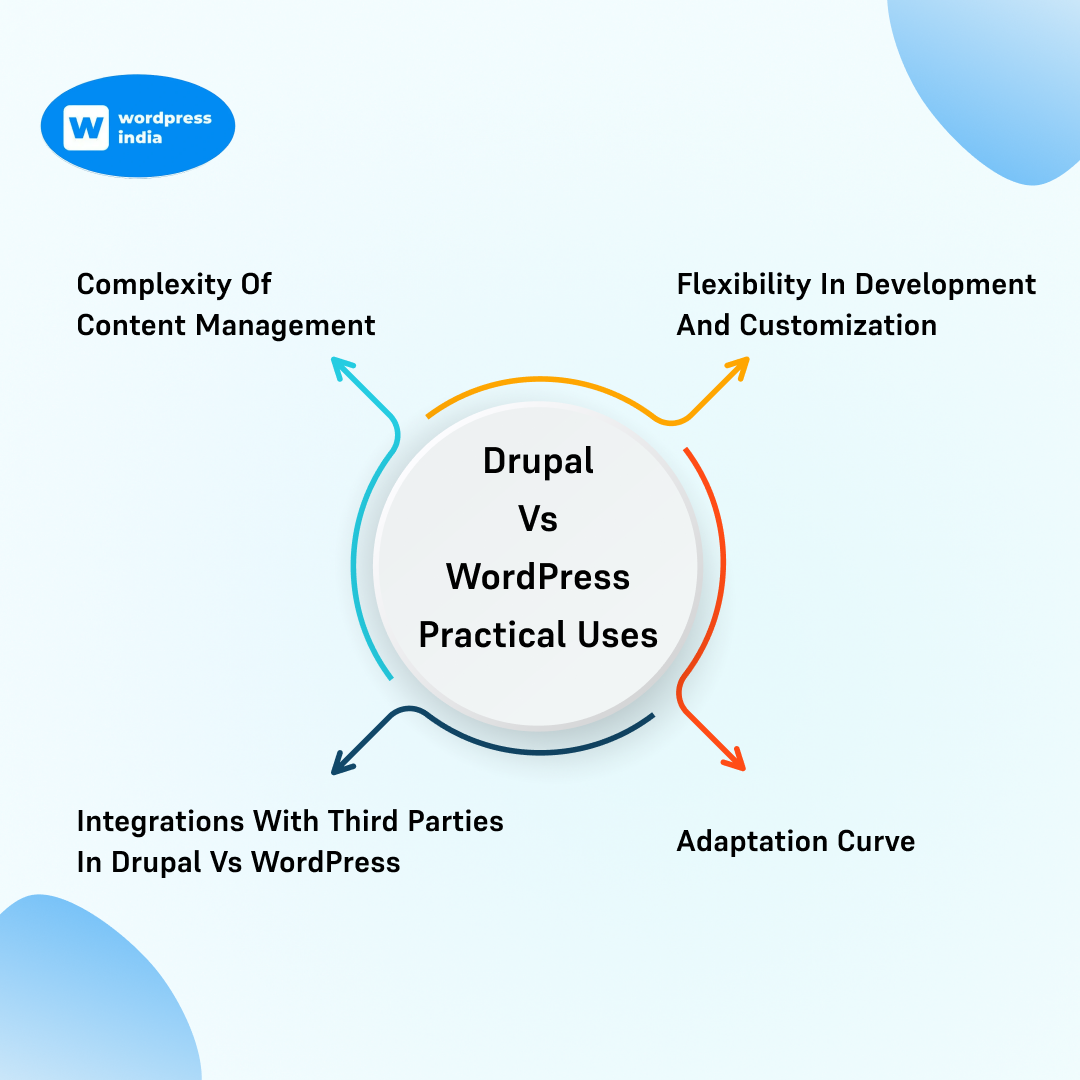
Drupal Vs WordPress Practical uses
While Drupal Vs WordPress have certain commonalities, they also stand apart from one another in the following ways:
- Complexity of Content Management
Advanced features like taxonomies, content types, and flexible workflows make Drupal’s content management system more potent.
- It excels at processing massive volumes of data and maintaining complicated content hierarchies.
- WordPress, on the other hand, is more centered on usability and simplicity, making it more suited for simple content management chores.
- Flexibility in Development and Customization
Drupal’s strong design and wide API support provide it more development freedom. WooCommerce development services enables programmers to create websites and apps that are highly customized.
- WordPress still provides a considerable number of customization possibilities via themes and plugins, despite being less versatile than Drupal.
- It achieves harmony between flexibility and simplicity.
Adaptation Curve
Drupal’s learning curve is higher than WordPress’ due to its more complex structure.
- Technically savvy users will like Drupal’s broad features, although learning it may take more time and effort.
- On the other side, even for novice or non-technical users, WordPress is significantly simpler to understand and operate.
Integrations with Third Parties in Drupal Vs WordPress
Due to the large number of plugins and themes available, WordPress is simple to connect with other services and technologies.
- It provides easy interaction with well-known social networking sites, marketing automation programmers, and e-commerce platforms.
- While Drupal also offers integration possibilities, WordPress has a larger selection that is instantly accessible, which saves time and effort.
Your company needs and the intricacy of your website will determine whether you choose Drupal Vs WordPress. Drupal is the best option if you want a fully customized CMS with cutting-edge capabilities and scalability. It excels in handling challenging tasks and managing complicated content hierarchies. However, WordPress is the best choice if you value simplicity, usability, and a vast community. It is ideal for those searching for an easy solution and small to medium-sized organizations.
Wrapping Up!
Employing a skilled WordPress development firm in India might be a wise business decision when it comes to creating WordPress websites. You can guarantee top-notch, personalized websites that match your company demands by outsourcing your WordPress development needs to knowledgeable and talented experts.
India is a desirable location for outsourcing WordPress development projects due to the availability of skilled WordPress developers there. These developers can assist you in building an aesthetically beautiful, user-friendly, and feature-rich website that increases traffic and strengthens your online presence.
They have experience in WordPress theme customization, plugin creation, and website optimization. So, if you want to maximize the potential of your online business, invest in a reputable WordPress development firm in India.
FAQ
Q. Why should I work with an Indian WordPress website development company?
There are several benefits to working with an Indian WordPress website development business. First off, there is a sizable pool of skilled and experienced WordPress developers in India that can produce high-quality websites at reasonable costs. Indian businesses are also renowned for their professionalism, commitment to deadlines, and excellent communication techniques.
Q. What services are provided by Indian WordPress development companies?
WordPress website design and development, theme and plugin customization, website optimization, website migration, maintenance and support, eCommerce solutions, and other services are all provided by WordPress development firms in India. They can manage both simple and intricate WordPress projects, according to the unique requirements of companies in different sectors.
Q. How do I choose the best Indian WordPress development company?
Consider criteria like their portfolio, experience, customer testimonials, knowledge of WordPress development, communication skills, project management methodology, price, and support services when selecting an Indian WordPress development business. Conduct in-depth research, get referrals, and speak with possible businesses to make sure they match your needs and objectives for your company and contact Us for more information.


